 A Oneindia Venture


 Click it and Unblock the Notifications
Notifications
Settings
Clear Notifications
Notifications
Use the toggle to switch on notifications
-
Block for 8 hours
-
Block for 12 hours
-
Block for 24 hours
-
Don't block
Paris 2024 Olympics Venues Map
The Paris 2024 Summer Olympics, being held between July 26 & August 11, 2024, feature a wide array of venues spread across the historic city of Paris. From iconic landmarks to state-of-the-art arenas, these venues will host the world's best athletes as they compete for Olympic glory. Here take a look at the diverse locations that are hosting various sporting activities in and around Paris and bringing the spirit of the Games to life.
Olympic Stadium
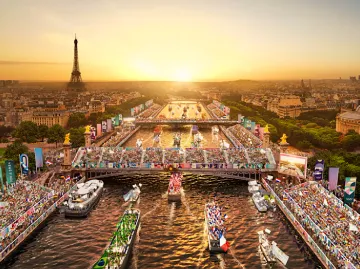
City: Paris, France
Capacity: 13,000
For the first time in Olympic Summer Games history, the Opening Ceremony will move beyond the traditional stadium setting. Paris 2024 is innovating by integrating sports into the city, with the Opening Ceremony taking place along the iconic Seine River. This groundbreaking event will showcase Paris in a new light, marking a historic moment for the Games.
How to Get There Using Public Transport?
Lyon's public transport network (TCL) provides daily access to the OL Stadium via:
Tramway T7 to the 'Décines OL Vallée' stop.
Tramway T3 to the 'Décines Grand Large' stop, then bus 85 to the 'Décines OL Vallée' stop.
Parc Des Princes
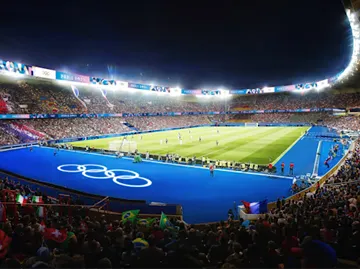
City: 24 Rue du Commandant Guilbaud, France
Established: 1897
Capacity: 48,583
Parc des Princes, an iconic venue in French sporting history, is situated in the 16th arrondissement of Paris. Known for its distinctive concrete columns that crown its roof, it is a standout feature in the Porte de Saint-Cloud area. Originally built in 1972 and designed by architect Roger Taillibert, who also designed Montreal’s Olympic Stadium, Parc des Princes is ideally positioned to host events for the Paris 2024 Games.
Nearby Places to visit: Bois de Boulogne, Louis Vuitton Foundation, Eiffel Tower, Champ de Mars
Nearby Olympic venues: Eiffel Tower Stadium, Champ de Mars Arena, Roland Garros, South Paris Arenas 1, 4 and 6
How to Get There Using Public Transport?
Gates A to G: 'Pont du Garigliano' stop: RER C/T3a, then 1.7 km walk to the venue
Gates H and I: 'Porte d'Auteuil' stop: Metro 10, then 700 m walk to the venue
Gates J to M: 'Porte de Saint-Cloud' stop: Metro 9, then 900 m walk to the venue
Gates N to P: 'Marcel Sembat' stop: Metro 9, then 1.1 km walk to the venue
Stade Geoffroy-guichard
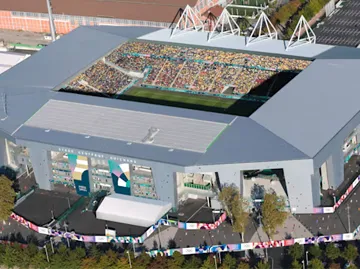
City: Saint-Étienne, France
Established: 1931
Capacity: 41,965
Saint-Etienne Stadium, also known as Geoffroy-Guichard Stadium, is one of France’s most iconic venues and has hosted some of the greatest moments in French football history with the legendary club AS Saint-Etienne. Built in 1931, the 'Chaudron' has undergone several renovations to accommodate major sports competitions throughout the 20th century. In 2024, it will proudly host events for the Olympic Games!
Nearby Places to visit: Le Pilat Regional Natural Park, Cité du Design, Museum of Modern and Contemporary Art, Le Corbusier architectural complex in Firminy, AS Saint-Etienne Museum, Loire Gorges
Nearby Olympic venues: Lyon Stadium
How to Get There Using Public Transport?
'Stade de France Saint-Denis' stop: RER D, then 1.2km walk to the venue
'Saint-Denis-Pleyel' stop: Metro 14, then 1.5 km walk to the venue
'Saint-Denis' stop: Line H, then 1.6 km walk to reach the venue
'Front Populaire' stop: Metro line 12, then 2.1 km walk to reach the venue
'La Plaine Stade de France' stop: RER B, then 600 m walk to reach the venue
'Saint-Denis Porte de Paris' stop: Metro 13, then 300 m walk to the venue
Stade De France
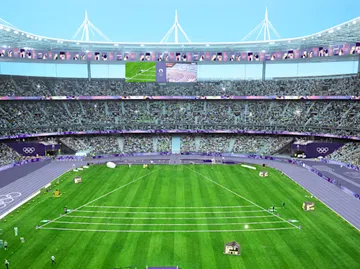
City: 93200 Saint-Denis, France
Established: 1998
Capacity: 77,000
For the Paris 2024 Olympic and Paralympic Games, Stade de France, the country's largest stadium, will transform into the Olympic Stadium. After three decades of hosting France's biggest sports events, this iconic venue, located in Saint-Denis, was designed by architects Macary, Zublena, Regembal, and Costantini. Originally built for the 1998 Football World Cup held in France, Stade de France is set to play a central role in the upcoming Olympic celebrations.
Nearby Places to visit: Saint-Ouen flea market, Saint-Denis Basilic
Nearby Olympic venues: Olympic Aquatics Centre, La Courneuve Shooting Range, La Chapelle Arena, Le Bourget Climbing Venue
Stade De La Beaujoire
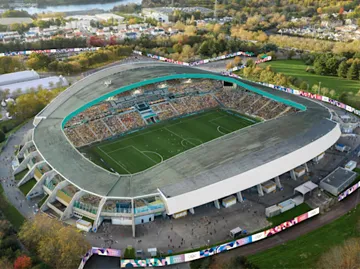
City: 44300 Nantes, French
Established: 1984
Capacity: 35,322
La Beaujoire Stadium, the legendary home of FC Nantes since its construction in 1984, was originally built to host the Euro 1984 Football Championship in France. As the city’s premier sports venue, La Beaujoire regularly hosts high-profile matches for major competitions in the country. The stadium underwent renovations in 1998 in preparation for the Football World Cup.
Nearby Places to visit: Saint-Pierre and Saint-Paul Cathedral, Château des Ducs de Bretagne, La Baule
Allianz Riviera
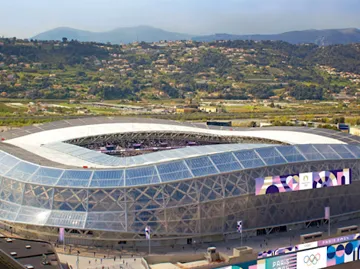
City: 06200 Nice, France
Established: 2013
Capacity: 44,624
Allianz Riviera is an ultramodern venue situated near the Mediterranean coast in southern France. Constructed in 2013 to replace the outdated Stade du Ray, this arena is home to the football club OGC Nice and has a capacity of 36,178. The stadium features over 10,000 sqm of exhibition space and is designed with environmentally responsible standards, including 7,000 sqm of rooftop solar panels and a system for harvesting and reusing rainwater.
Nearby Places to visit: Promenade des Anglais, Château de Nice, Musée National Marc Chagall, Côte d'Azur
Nearby Olympic venues: Marseille Stadium, Marseille Marina
Matmut Atlantique
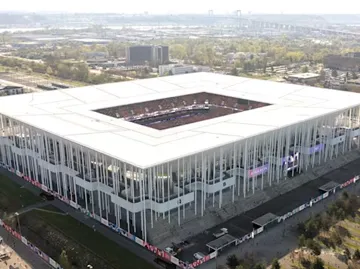
City: Bordeaux, France
Established: 2015
Capacity: 34,462
Matmut Atlantique, also known as Bordeaux Stadium, was built to host the men’s 2016 European Football Championship. Located between the Floral Gardens and Bois de Bordeaux forest, the venue was completed in 2015 and quickly became the premier football stadium for the world’s wine capital. Designed by renowned architects Herzog & De Meuron, who also designed Beijing’s Olympic Stadium, Matmut Atlantique is celebrated for its spectacular design and exceptional spectator experience.
Nearby Places to visit: Cité du Vin, Place des Quinconces, Saint-André Cathedral, Arcachon Bay, Dune du Pyla, Les Landes beaches
Groupama Stadium
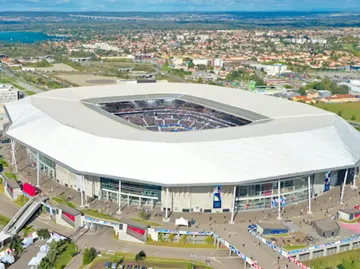
City: Décines-Charpieu, France
Established: 2016
Capacity: 59,186
Groupama Stadium is an ultramodern venue owned by its resident football club, Olympique Lyonnais, seven-time Ligue 1 champions. Built to host matches for Euro 2016, the stadium was inaugurated in early 2016 in Décines, near Lyon. Once the capital of the Gauls, the city now boasts a brand-new multifunctional venue, the third largest in France by capacity. Capable of hosting major international events year-round, Groupama Stadium will be a key asset in welcoming spectators for the 2024 Olympic Games.
Nearby Places to visit: The famous Bouchons Lyonnais restaurants, Notre Dame de Fourvière Basilica, Place Bellecour, Parc de la Tête d'or, Musée des Confluences, French Alps
Nearby Olympic venues: Saint-Etienne Stadium
Orange Vélodrome
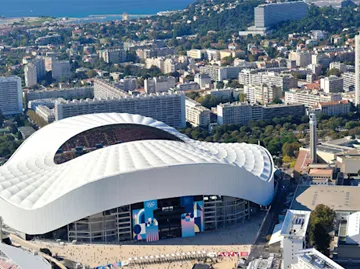
City: 78180 Montigny-le-Bretonneux, French
Established: 2014
Capacity: 6,000
The legendary Marseille Stadium, also known as Stade Vélodrome, is France’s second-largest arena and has been the home ground for Olympique de Marseille, its resident football club, since its construction. Built in 1937, Stade Vélodrome has undergone several renovations, the most recent of which was completed in 2014 by architects SCAU. This latest renovation gave the stadium a modern new look with a roof covering its curved stands and an increased capacity, enhancing its status as a premier venue for European and national football achievements.
Nearby Places to visit: Old Port, Château d’If, Notre Dame de la Garde Basilica, MUCEM, Calanques National Park
Nearby Olympic venues: Stade Vélodrome
How to Get There Using Public Transport?
'Saint-Quentin-en-Yvelines' stop: RER C from Paris towards Saint-Quentin-en-Yvelines / Train N from Paris towards Rambouillet / Train U from Paris towards La Verrière, then 1 km walk to the venue.
South Paris Arena 6
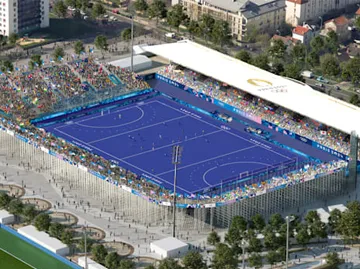
City: 15th arrondissement, France
Established: 1923
Capacity: 6,000
South Paris Arena 6 is a prominent venue within the Paris Expo, a bustling exhibition and convention center renowned as one of Europe's most active and France's most visited. Spanning 35 hectares, it features 228,000 sqm of exhibition halls across eight pavilions, attracting 7.5 million visitors annually, notably during events like the International Agricultural Show. Halls 1, 4, and 6 will host a significant number of events during the Games, while others will support logistical operations, making Paris Expo a central hub for the Paris 2024 Games.
Nearby Places to visit: Eiffel Tower, Champ de Mars, Bois de Boulogne
Nearby Olympic venues: Roland-Garros Stadium, Parc des Princes, Pierre de Coubertin Stadium, Eiffel Tower Stadium, Champ de Mars Arena
How to Get There Using Public Transport?
'Porte de Vanves' stop: Metro 13, then 1.4 km to the venue
'Balard' stop: Metro 8, then 750 m walk to the venue
'Georges Brassens' stop: T3a, then 700 m walk to the venue
'Porte de Versailles' stop: Metro 12, then 150 m walk to the venue
Invalides
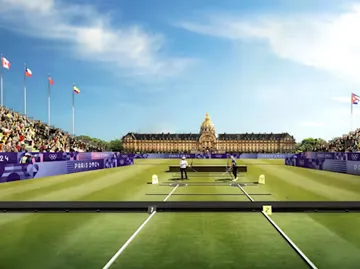
City: 7th arrondissement, France
Established: 1687
Capacity: 15000
The Esplanade des Invalides is the picturesque garden adjoining one of Paris’ most exquisite landmarks. Nestled in the 7th district, it stretches across a vast green space facing the majestic Hôtel des Invalides. Central to Paris, it has evolved into a favored recreational spot where both locals and tourists indulge in sports, music, and leisurely strolls. In 2024, this historic venue will merge history, culture, and top-tier sports as archers aim for Olympic and Paralympic medals amid its exceptional surroundings.
Nearby Places to visit: Pont Alexandre III, Grand Palais, Eiffel Tower, La Concorde, Hôtel des Invalides, Jardin du Luxembourg
Nearby Olympic venues: Eiffel Tower Stadium, Grand Palais, Champ de Mars Arena, Pont d'Iéna
How to Get There Using Public Transport?
'Invalides' stop: RER C, then 100 m walk to the venue
'Invalides' stop: Metro 13, then a 450 m walk to reach the venue
'La Tour Maubourg' stop: Metro 8, then 850 m walk to reach the venue
'Assemblée Nationale' stop: Metro 12, then 700 m walk to reach the venue
Adidas Arena
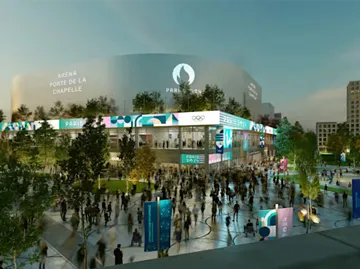
City: Av. de la Prte de la Chapelle, France
Established: 1900
Capacity: 8,000
The Porte de la Chapelle Arena, an eco-friendly venue designed for long-term community benefits extending beyond the Games, stands as a new cultural cornerstone in northern Paris. It hosts a diverse array of cultural and sporting events daily, including the home games of Paris Basketball. This facility is intentionally inclusive, welcoming residents and offering a variety of sports activities in its versatile spaces. With a capacity of 8,000 seats, the Porte de la Chapelle Arena enriches Paris' landscape of sports and live performance venues, catering to a wide range of interests throughout the city.
Nearby Places to visit: Montmartre and Sacré-Cœur Basilica, Saint-Denis Basilica, Saint-Ouen flea market
Nearby Olympic venues: Stade de France, Olympic Aquatics Centre
How to Get There Using Public Transport?
'Rosa Parks' stop: RER E, then 1.15 km walk to reach the venue
'Porte de la Chapelle' stop: T3b / Métro 12, then 300 m walk to the venue
Vaires-sur-marne Nautical Stadium
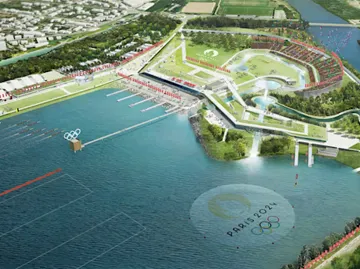
City: 77360 Vaires-sur-Marne, France
Established: 2019
Capacity: 22,000
In 2024, the Vaires-sur-Marne Nautical Stadium at the Vaires-Torcy leisure complex will be the venue for Olympic rowing and canoe-kayak events, as well as Paralympic Para rowing and Para canoe-kayak events. This state-of-the-art Nautical Stadium, completed in 2019, marks the first newly built Olympic facility and has garnered praise from the French Rowing and Canoe-Kayak Federations for its modern amenities and strategic location.
Nearby Places to visit: Disneyland Paris theme park, former Menier chocolate factory
How to Get There Using Public Transport?
'Bussy-Saint-Georges' station on the RER A to Marne-la-Vallée Chessy (from Paris), linked directly to the venue by a free Paris 2024 bus service for spectators;
'Vaires Torcy' station on the Train P from Gare de l'Est in Paris to Meaux;
'Chelles Gournay' station, the terminus of one of the branches of the RER E from Paris, linked directly to the venue by a free Paris 2024 bus service for spectators.
Chateauroux Shooting Centre
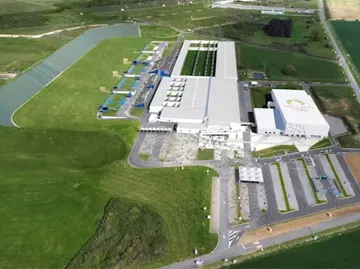
City: Châteauroux, French
Established: 2018
Capacity: 3,000
The Chateauroux Shooting Centre is set to host the shooting events for both the Olympic and Paralympic Games in Paris 2024. Opened by the French Shooting Federation in 2018, this expansive venue is among Europe's largest of its kind. Featuring multiple shooting ranges, it is fully equipped to accommodate all shooting disciplines during the Games. Recently, in 2022, the centre expanded with a dedicated 'finals' building, specifically designed for international pistol and rifle finals. This facility will serve as the venue for all indoor shooting finals at the Paris 2024 Games.
How to Get There Using Public Transport?
'Bussy-Saint-Georges' station on the RER A to Marne-la-Vallée Chessy (from Paris), linked directly to the venue by a free Paris 2024 bus service for spectators;
'Vaires Torcy' station on the Train P from Gare de l'Est in Paris to Meaux;
'Chelles Gournay' station, the terminus of one of the branches of the RER E from Paris, linked directly to the venue by a free Paris 2024 bus service for spectators.
South Paris Arena 1
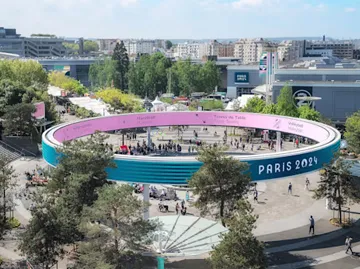
City: 15th arrondissement, France
Established: 1923
Capacity: 6,000
The South Paris Arena 1 is situated within Paris Expo, a bustling exhibition and convention center renowned as one of Europe's busiest and France's most visited venues. Spanning 35 hectares, Paris Expo boasts 228,000 sqm of exhibition halls across eight pavilions, drawing 7.5 million visitors annually, especially during events like the International Agricultural Show. Halls 1, 4, and 6 will serve as primary venues for numerous events during the Paris 2024 Games, making Paris Expo a pivotal hub for the Games' activities and logistics.
Nearby Places to visit: Eiffel Tower, Champ de Mars, Bois de Boulogne
Nearby Olympic venues: Roland-Garros Stadium, Parc des Princes, Pierre de Coubertin Stadium, Eiffel Tower Stadium, Champ de Mars Arena
How to Get There Using Public Transport?
'Porte de Vanves' stop: Metro 13, then 1.4 km to the venue
'Balard' stop: Metro 8, then 750 m walk to the venue
'Georges Brassens' stop: T3a, then 700 m walk to the venue
'Porte de Versailles' stop: Metro 12, then 150 m walk to the venue
Château De Versailles
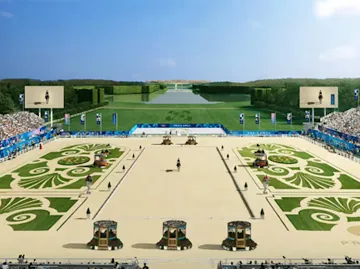
City: Versailles, France
Established: 1682
Capacity: 15000
The Château de Versailles, also known as the Palace of Versailles, epitomizes France's prestigious legacy and will serve as the splendid backdrop for the Olympic and Paralympic Games in 2024. Originally constructed as a modest hunting lodge, the palace evolved into the grand residence of Louis XIV's court by 1682, becoming synonymous with French royalty. In 1883, it transformed into a national museum, marking a pivotal moment in its history, and in 1979, it earned UNESCO World Heritage status, solidifying its global significance.
Nearby Olympic venues: National Velodrome, Saint-Quentin-en-Yvelines BMX Stadium, Golf National, Elancourt Hill
How to Get There Using Public Transport?
'Versailles Rive Droite' stop: Line L towards Versailles, then take the free Paris 2024 bus for spectators, or walk 40 minutes to the venue.
'Versailles-Chantiers' stop: RER C towards Saint-Quentin-en-Yvelines or Versailles Chantiers / Line N / U, then take the free Paris 2024 bus for spectators or walk 50 minutes to reach the venue.
'Versailles-Château' stop: RER C towards Versailles Château Rive Gauche, then take the free Paris 2024 bus for spectators or walk 40 minutes to the venue.
Grand Palais
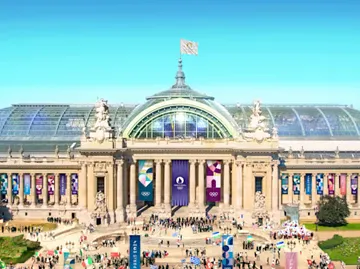
City: Avenue Winston-Churchill, France
Established: 1900
Capacity: 18520
The Grand Palais, centrally located in Paris, stands as an architectural marvel. Originally constructed for the 1900 Paris Universal Exhibition, it showcases pioneering construction techniques, including its iconic glass roof and majestic nave. The construction required over 6,000 tonnes of steel, highlighting its engineering excellence. Recently undergoing comprehensive restoration, the Grand Palais is set to reopen on April 15th, serving as a prestigious venue for the Olympic and Paralympic Games within its historic nave.
Nearby Places to visit: Petit Palais, Champs-Elysées, Arc de Triomphe, La Concorde, Pont Alexandre III, Louvre Museum
Nearby Olympic venues: Invalides, Eiffel Tower Stadium, Champ de Mars Arena, La Concorde
How to Get There Using Public Transport?
'Franklin D.Roosevelt' stop: Metro 1, then a 450 m walk to reach the venue
'Invalides' stop: RER C, then walk 1 km to reach the venue
'Invalides' stop: Metro 8 / 13, then 1.2 km walk to reach the venue
Stade Yves-du-manoir
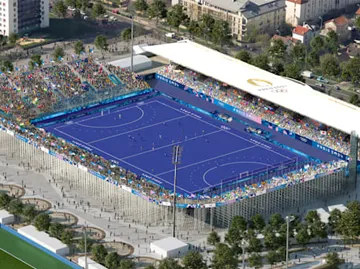
City: 92700 Colombes, France
Established: 1907
Capacity: 15,000
Yves-du-Manoir Stadium, a venue of rare distinction, has had the honor of hosting the Olympic Games on two occasions. Originally designed by architect Louis Faure-Dujarric, the stadium first served as the main arena for the eighth Olympiad in 1924, hosting both the Opening Ceremony and various athletics events. It stands as a unique landmark in France, being the only venue in the country to host events from two distinct Olympic Games, now preparing to host the hockey competitions at Paris 2024.
Nearby Olympic venues: La Défense Arena in Nanterre, Stade de France or the Olympic Aquatics Centre
How to Get There Using Public Transport?
'Le Stade' stop: Ligne J towards Ermont Eaubonne, then a 1 km walk to the venue.
Champ-de-mars Arena
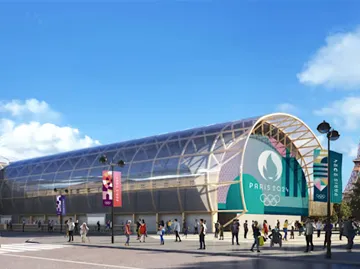
City: 7th arrondissement, France
Established: 2021
Capacity: 13,000
During the Paris 2024 Games, the illustrious Champ de Mars Arena will transcend its current name, the 'Grand Palais Éphémère,' by serving as a 10,000 sqm temporary venue for Olympic events while renovations proceed at the Grand Palais. Post-2024, after completing these enhancements, the Champ de Mars Arena will remain in place for several additional months to host competitions during the Paris 2024 Olympic and Paralympic Games.
Nearby Places to visit: Eiffel Tower, Champ de Mars, Ecole Militaire, Hôtel des Invalides, Grand Palais, Trocadéro
Nearby Olympic venues: Eiffel Tower Stadium, Pont d'Iéna, Invalides, Grand Palais
How to Get There Using Public Transport?
La Motte-Picquet - Grenelle' stop: Métro 6/8, then walk 400m to reach the venue.
Ségur' stop: Métro 10, then walk 800 m to reach the venue
Stade Pierre-mauroy
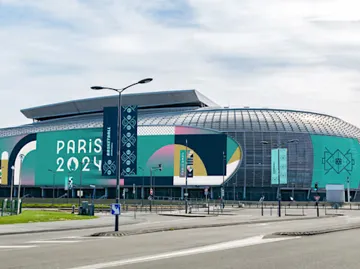
City: 59650 Villeneuve-d'Ascq, France
Established: 2012
Capacity: 26,000
Constructed in 2012 and serving as the home ground for Lille Olympique Sporting Club (LOSC), Stade Pierre-Mauroy stands as a versatile, state-of-the-art sports complex. Situated in Villeneuve-d’Ascq, it provides the Hauts de France region and the European Metropolis of Lille—a major urban area—as well as the country's fourth-largest city, with an exceptional venue capable of hosting a variety of cultural and sporting events year-round.
Nearby Places to visit: Citadelle de Lille, Lille Métropole Musée d'art moderne, Palais des Beaux-Arts, Grand'Place, Old Lille
Aquatics Centre
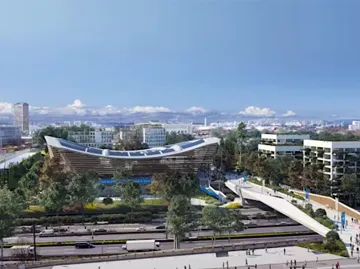
City: London, United Kingdom
Established: 2014
Capacity: 3,800
The Aquatics Centre, alongside Le Bourget Climbing Wall, stands as the sole permanent sports facility constructed for the Paris 2024 Games. Set to host the artistic swimming, water polo, and diving events, it will gather the world's top athletes in 2024. Beyond the Games, the Aquatics Centre is a testament to forward-thinking design, meeting the long-term needs of Seine-Saint-Denis, its host region, and the broader French swimming community. It is poised to become a premier venue for major national and international competitions.
Nearby Places to visit: Sacré Cœur Basilica, Montmartre, Saint-Denis Basilica, Saint-Ouen flea market
Nearby Olympic venues: Stade de France, La Chapelle Arena, Olympic and Paralympic Village, La Courneuve Shooting Range, Le Bourget Sport Climbing Venue
How to Get There Using Public Transport?
'Stade de France Saint-Denis' stop: RER D, then 1.2 km walk to the venue
'Saint-Denis-Pleyel' stop: Metro 14, then 1.5 km walk to reach the venue.
Accor Arena

City: Paris, France
Established: 1984
Capacity: 20,300
Accor Arena is a cultural and sporting icon in Paris and throughout France, distinguished by its pyramid-shaped design that dominates the skyline of Paris’ 12th district. Established in 1984, this venue serves as the backdrop for prestigious sports events like the Rolex Paris Masters and the final rounds of the 2018 European women’s handball championship. It also hosts concerts featuring top French and international artists such as Madonna, Daft Punk, Johnny Hallyday, and Paul McCartney.
Nearby Places to visit: Bois de Vincennes, Latin Quarter, Notre-Dame Cathedral, Hôtel de Ville de Paris
How to Get There Using Public Transport?
1. 'Gare de Lyon' stop: RER A / RER D / Train R / Métro 1, then 1.1 km walk to reach the venue
2. 'Bercy' stop: Metro 6 / 14, site entrance right next to the metro exit
Paris La Défense Arena
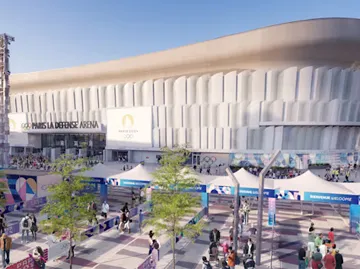
City: 92000 Nanterre, France
Established: 2017
Capacity: 40,000
Paris La Défense Arena in Nanterre is a remarkable venue renowned for its scale, capacity, and cutting-edge technology. Featuring 13 kilometers of stands, a 5,500-ton framework, and 28,632 square meters of courts and pitches, this arena has already attracted over two million spectators since its inception. It has hosted performances by top international artists, conventions, seminars, and served as the venue
for Racing 92 rugby matches. In 2024, it will make history by hosting swimming events for the first time. Nearby Places to visit: Arche de La Défense, Arc de Triomphe, Champs-Elysées
Nearby Olympic venues: Champs-Elysées, Yves-du-Manoir Stadium
How to Get There Using Public Transport?
'La Défense' stop: RER A / metro 1 / Line L / Line U / T2, then 650 m walk to the venue
'Nanterre-préfecture' stop: RER A, then 515 m walk to reach the venue
Stade Roland Garros
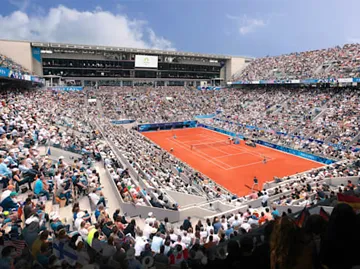
City: 2 Av. Gordon Bennett, France
Established: 1928
Capacity: 15,225
Stade Roland-Garros, renowned as a legendary tennis stadium on the global stage, will play a pivotal role in the Paris 2024 Games, marking a new chapter in its storied history. In addition to hosting tennis and wheelchair tennis competitions, Roland-Garros will also serve as the venue
for boxing and sitting volleyball events during the Paris 2024 Games. Nearby Places to visit: Eiffel Tower, Invalides, Bois de Boulogne, Louis Vuitton Foundation, Jardin d'acclimatation
Nearby Olympic venues: Parc des Princes, South Paris Arena #1, #4 and #6, Eiffel Tower Stadium, Esplanade des Invalides, Pont d'Iéna, Champ de Mars Arena
How to Get There Using Public Transport?
'Avenue Foch' stop: RER C, then take the free Paris 2024 bus to the venue
'Porte Dauphine' stop: Metro 2 / T3b, then take the free Paris 2024 bus to the venue
'Porte d'Auteuil' stop: Metro 10, then 600 m walk to the venue
Eiffel Tower Stadium
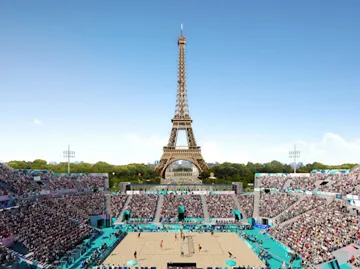
City: 7th arrondissement, France
Established: 2024
Capacity: 13,000
The Champ de Mars holds a special place in the hearts of Parisians as a vibrant gathering spot, drawing crowds for festive occasions like the 14th of July fireworks and major football finals. Daily, visitors converge here to engage in sports, admire the scenery, or leisurely stroll through its expansive paths and lawns, making it one of Paris' most iconic public gardens. In 2024, a temporary outdoor arena will grace this historic site, hosting beach volleyball and blind football events, offering everyone a chance to revel in its enchanting ambiance.
Nearby Places to visit: Eiffel Tower, Ecole Militaire, Trocadéro, Hôtel des Invalides, Rodin Museum, Quai Branly Museum
Nearby Olympic venues: Champ de Mars Arena, Pont d'Iéna, Grand Palais, Invalides
How to Get There Using Public Transport?
Pont de l'Alma' stop: RER C, then walk 950 m to reach the venue
Champ de Mars Tour Eiffel' stop: RER C, then 600 m walk to reach the venue
Alma-Marceau' stop: Metro 9, then 1.25 km walk to reach the venue
Bir-Hakeim' stop : Metro 6, then walk 800 m to reach the venue
Grand Palais-pont Alexandre Iii
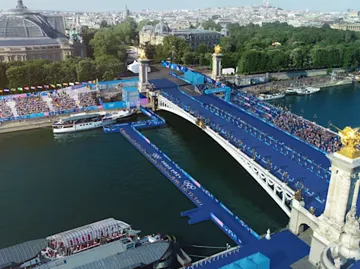
City: spans the Seine, France
Established: 1900
Capacity: 1,000
In the heart of Paris spans Pont Alexandre III, a bridge linking the Seine's two banks amidst the city's myriad monuments. Since its inauguration for the 1900 Exposition Universelle, it has played a central role in Parisian history, celebrated as both a work of art and a revered monument in its own right.
Nearby Places to visit: La Concorde, Champs-Elysées, Grand Palais, Hôtel des Invalides, Eiffel Tower
Nearby Olympic venues: La Concorde, Esplanade des Invalides, Grand Palais, Pont d’Iéna, Arena Champ-de-Mars, Eiffel Tower Stadium
How to Get There Using Public Transport?
'Franklin D.Roosvelt' stop: Metro 1/9, then 700 m walk to reach the venue
'Invalides' stop: RER C / Métro 13/8, then 650 m walk to reach the venue
South Paris Arena 4
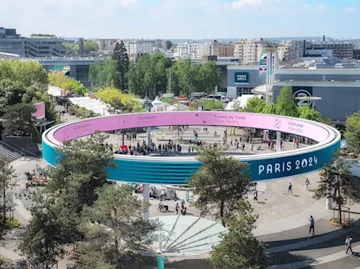
City: 15th arrondissement, French
Established: 1923
Capacity: 6,000
The South Paris Arena 4, situated within the Paris Expo complex, stands as a prominent part of Europe's busiest exhibition and convention center. Spanning 35 hectares with 228,000 sqm of exhibition halls and eight pavilions, Paris Expo annually welcomes 7.5 million visitors, notably during events like the International Agricultural Show. Halls 1, 4, and 6 will host a significant array of events during the Paris 2024 Games, establishing Paris Expo as a pivotal hub for this prestigious event.
Nearby Places to visit: Eiffel Tower, Champ de Mars, Bois de Boulogne
Nearby Olympic venues: Roland-Garros Stadium, Parc des Princes, Pierre de Coubertin Stadium, Eiffel Tower Stadium, Champ de Mars Arena
How to Get There Using Public Transport?
'Porte de Vanves' stop: Metro 13, then 1.4 km to the venue
'Balard' stop: Metro 8, then 750 m walk to the venue
'Georges Brassens' stop: T3a, then 700 m walk to the venue
'Porte de Versailles' stop: Metro 12, then 150 m walk to the venue
North Paris Arena
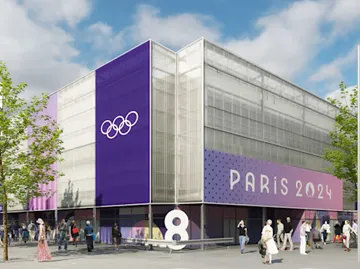
City: Villepinte exhibition centre, French
Established: 2017
Capacity: 14,962
The Villepinte Exhibition Centre will transform into the expansive 'North Paris Arena' for the Games, converting its nine halls into a versatile sports facility. As France's largest exhibition center, Villepinte is second only to the Paris Expo at Porte de Versailles in size. Strategically located in Villepinte, at the heart of Seine-Saint-Denis, this arena is designed to accommodate large audiences, offering an ideal setting for spectators to experience the excitement of the Paris 2024 Olympic and Paralympic Games firsthand.
Nearby Olympic venues: Stade de France, Le Bourget sport climbing venue, the Aquatics centre, Olympic and Paralympic Village
How to Get There Using Public Transport?
'Parc des Expositions' stop: RER B, then 300 m walk to the site.
Teahupo'o
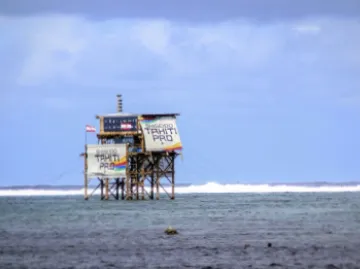
City: Teahupo’o, on the island of Tahiti, French
Established: 1985
Paris 2024 is set to elevate celebrations and captivate audiences with thrilling sports, embodying the timeless spirit of the Olympic Games. The event will feature four spectacular disciplines, including surfing, each showcased at carefully selected, world-class venues. Surfing, making its second Olympic appearance after Tokyo 2020, will be held at the renowned Teahupo’o wave in Tahiti. Known for its challenging and beautiful waves, Teahupo’o provides an exceptional setting for this prestigious event. Join us in Paris 2024 for an unforgettable experience as we celebrate the pinnacle of athletic excellence in iconic locations.
Nearby Places to visit: The Islands of Tahiti offer a rich tapestry of experiences to fully immerse yourself in. Engage with the local population and embrace their authentic traditions. Explore the pristine islands and uncover the unique flora and fauna both on land and at sea. Discover the unspoiled beauty of Tahiti and create unforgettable memories.
La Concorde 3
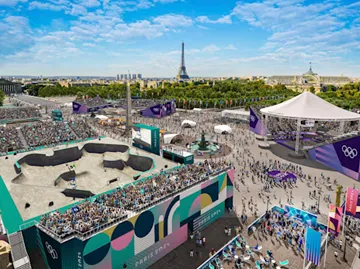
City: 8th district, France
Established: 1830
Capacity: 10,000
Since the early stages of bidding for the Games, Paris 2024 has strived to integrate urban sports into the city's natural environment, moving beyond traditional stadiums and positioning them at the heart of urban life. This vision comes to life through the temporary transformation of La Concorde 3 into an open arena. This initiative highlights the substantial urban planning efforts undertaken by the Paris City Council to rejuvenate this site in a sustainable manner.
Nearby Places to visit: Grand Palais, Eiffel Tower, Hôtel des Invalides, Champs-Elysées, Arc de Triomphe, Notre-Dame Cathedral, Jardin des Tuileries
Nearby Olympic venues: Champ de Mars Arena, Esplanade des Invalides, Trocadéro, Eiffel Tower Stadium, Grand Palais
How to Get There Using Public Transport?
Auber' stop: RER, then a 1000 m walk to reach the venue
Musée d'Orsay' stop: RER, then 660 m walk to reach the venue
Palais Royal-Musée du Louvre' stop : Metro 1 / 7, then 1 150 m walk to reach the venue
Stop 'Madeleine' : Metro 8 / 12 / 14, then a 450 m walk to reach the venue
Franklin D.Roosevelt' stop: Metro 9, then 700 m walk to reach the venue
Marseille Marina
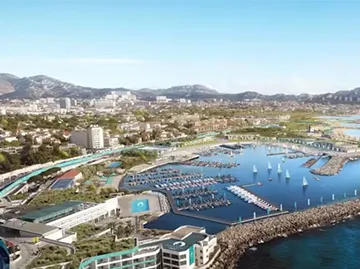
City: Rond-Point du Prado, France
Established: 2014
Capacity: 14,000
The sailing events of Paris 2024 will take place in Marseille, leveraging the city's natural affinity for the sea and its exceptional sailing conditions. Marseille, renowned for its maritime expertise and history of hosting boat-related events, along with its state-of-the-art Marina, provides an ideal venue for the sailing competitions of the Paris 2024 Games.
Nearby Places to visit: Old Port, Château d'If, Îles du Frioul Archipelago, Notre-Dame de la Garde Basilica, MUCEM Museum of European and Mediterranean Civilisations, Les Calanques National Park, Provence Region, surrounding coastline
Nearby Olympic venues: Nice Stadium, Marseille Marina
How to Get There Using Public Transport?
Marseille Marina will be served by the Rond‑Point du Prado metro station (line M2), and by bus stops at La Plage (line 19) and Plage Roucas Blanc (line 83).
Élancourt Hill

City: Île-de-France, France
Established: -
Capacity: -
At 231 meters above sea level, Elancourt Hill stands as the highest point in the Paris region, providing sweeping vistas of the Eiffel Tower, La Défense, and the surrounding forests. To preserve its biodiversity, minimal infrastructure will be introduced at the site. For the Olympic mountain bike events, 95 percent of the trails, meticulously designed by South African expert Nick Floros, will utilize existing paths. Furthermore, these routes will be left as a lasting legacy of the Games, offering a range of accessible trails suitable for all users, from families and beginners to seasoned riders.
Nearby Places to visit: Palace of Versailles
Nearby Olympic venues: National Velodrome, Saint-Quentin-en-Yvelines BMX Stadium, Golf National, Palace of Versailles
How to Get There Using Public Transport?
'Saint-Quentin-en-Yvelines' stop: Line N from Paris towards Rambouillet / Line U from Paris towards La Verrière / RER C from Paris towards Saint-Quentin-en-Yvelines, then free Paris 2024 bus dedicated to spectators to get to the venue
.La Concorde 2
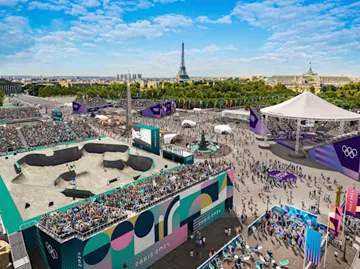
City: 8th district, France
Established: 1830
Capacity: 10,000
Paris 2024 has aimed from the start to integrate urban sports into natural urban environments, extending beyond stadiums and placing them at the city's core. This vision is exemplified by the temporary transformation of La Concorde into an open arena. This initiative underscores the substantial urban planning changes that Paris City Council plans to implement for the sustainable reorganization of this historic site.
Nearby Places to visit: Grand Palais, Eiffel Tower, Hôtel des Invalides, Champs-Elysées, Arc de Triomphe, Notre-Dame Cathedral, Jardin des Tuileries
Nearby Olympic venues: Champ de Mars Arena, Esplanade des Invalides, Trocadéro, Eiffel Tower Stadium, Grand Palais
How to Get There Using Public Transport?
Auber' stop: RER, then a 1000 m walk to reach the venue
Musée d'Orsay' stop: RER, then 660 m walk to reach the venue
Palais Royal-Musée du Louvre' stop : Metro 1 / 7, then 1 150 m walk to reach the venue
Stop 'Madeleine' : Metro 8 / 12 / 14, then a 450 m walk to reach the venue
Franklin D.Roosevelt' stop: Metro 9, then 700 m walk to reach the venue
La Concorde 1
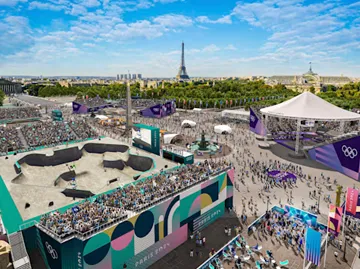
City: 8th district, France
Established: 1830
Capacity: 10,000
Since the outset of their bid for the Games, Paris 2024 aimed to integrate urban sports into their natural urban environments, moving beyond stadiums and placing them at the heart of the city. This vision comes to life through the temporary transformation of La Concorde into an open arena. This initiative also highlights the significant urban planning changes that Paris City Council intends to implement for the sustainable reorganization of this historic site.
Nearby Places to visit: Grand Palais, Eiffel Tower, Hôtel des Invalides, Champs-Elysées, Arc de Triomphe, Notre-Dame Cathedral, Jardin des Tuileries
Nearby Olympic venues: Champ de Mars Arena, Esplanade des Invalides, Trocadéro, Eiffel Tower Stadium, Grand Palais
How to Get There Using Public Transport?
Auber' stop: RER, then a 1000 m walk to reach the venue
Musée d'Orsay' stop: RER, then 660 m walk to reach the venue
Palais Royal-Musée du Louvre' stop : Metro 1 / 7, then 1 150 m walk to reach the venue
Stop 'Madeleine' : Metro 8 / 12 / 14, then a 450 m walk to reach the venue
Franklin D.Roosevelt' stop: Metro 9, then 700 m walk to reach the venue
Pont D'iéna
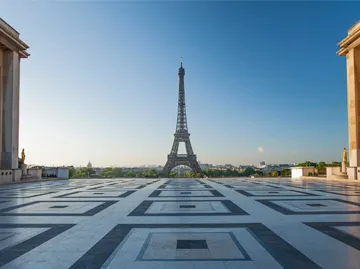
City: 16th arrondissement, Paris
Established: 1878
Capacity: -
The Pont d'Iéna and the Eiffel Tower face each other as one of Paris' most iconic landmarks. In 2024, this central area will be dedicated to the Games, hosting multiple events and a variety of activities to celebrate the athletes and their achievements.
Nearby Places to visit: Eiffel Tower, Champ de Mars, Ecole Militaire, Hôtel des Invalides, Grand Palais, Pont d’Iéna
Nearby Olympic venues: Eiffel Tower Stadium, Esplanade des Invalides, Champ de Mars Arena
Le Golf National
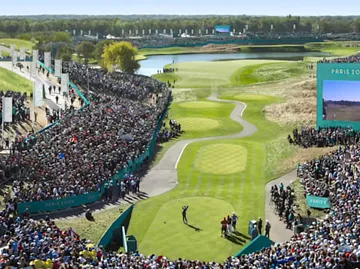
City: Saint-Quentin-en-Yvelines, France
Established: -
Capacity: 55,000
Golf National provides the ideal course and setting for the 120 players participating in the Olympic tournament. Featuring two 18-hole courses, 'L’Albatros' is renowned for its challenging and competitive nature, having hosted prestigious international events like the 2018 Ryder Cup.
Nearby Places to visit: Palace of Versailles
Nearby Olympic venues: Elancourt Hill, National Velodrome and BMX Stadium, Palace of Versailles
How to Get There Using Public Transport?
'Massy-Palaiseau' stop: RER B from Paris towards Saint-Rémy-lès-Chevreuse / RER C from Paris towards Massy Palaiseau / T12 then free Bus Paris 2024 dedicated to spectators to get to the venue.
'Saint-Quentin-en-Yvelines' stop: Line N from Paris towards Rambouillet / Line U from Paris towards La Verrière / RER C from Paris towards Saint-Quentin-en-Yvelines, then take the free Bus Paris 2024 dedicated to spectators to get to the venue.
Saint-quentin-en-yvelines Bmx Stadium
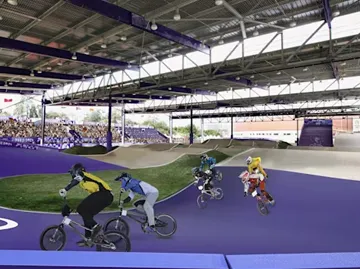
City: 78180 Montigny-le-Bretonneux, France
Established: 2014
Capacity: 5,000
The Saint-Quentin-en-Yvelines BMX Stadium is situated within the Saint-Quentin-en-Yvelines Velodrome complex, conveniently located just a five-minute walk from the velodrome itself. This proximity allows for the integration of two Games venues in one location, much to the satisfaction of cycling enthusiasts. This close proximity also facilitates the sharing of certain facilities necessary for organizing both the BMX and track cycling events of the Games.
Nearby Places to visit: Château de Versailles
Nearby Olympic venues: Saint-Quentin-en-Yvelines Velodrome, Golf National, Elancourt Hill, Château de Versailles
How to Get There Using Public Transport?
'Saint-Quentin-en-Yvelines' stop: RER C from Paris towards Saint-Quentin-en-Yvelines / Train N from Paris towards Rambouillet / Train U from Paris towards La Verrière, then 1 km walk to the venue
.
Le Bourget Sport Climbing Venue
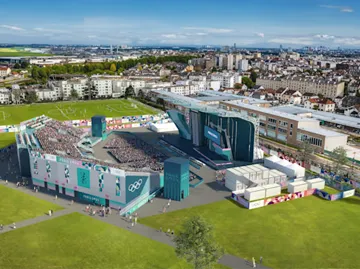
City: Le Bourget, France
Established: -
Capacity: 6,000
The addition of sport climbing to the Olympic Games highlights Paris 2024's commitment to introducing new and modern sports that resonate with a youthful demographic, promoting widespread participation. As one of the dedicated venues built for the Games, alongside the Olympic Aquatics Centre in Saint-Denis, Le Bourget Climbing venue stands out as a facility designed specifically for Paris 2024. Beyond the Games, this venue addresses a local demand and expectation within the Seine-Saint-Denis community.
Nearby Olympic venues: Dugny Media Village, La Courneuve Shooting Range, Stade de France, Olympic Aquatics Centre
How to Get There Using Public Transport?
'Le Bourget’ stop: RER B, then 800 m walk to the venue
'Le Bourget’ stop: T11, then 900 m walk to the venue
Vélodrome National De Saint-quentin-en-yvelines
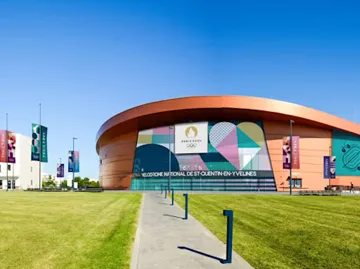
City: Yvelines,Montigny-le-Bretonneux
Established: 2014
Capacity: 6,000
The Saint-Quentin-en-Yvelines Velodrome stands as a remarkable showcase, completed and operational a decade before the Paris 2024 Games. Serving as a cornerstone of the French Cycling Federation, which has made its headquarters there since the venue's inauguration in 2014, this state-of-the-art facility hosts various French teams in its modern facilities. Designed with modularity and flexibility in mind, highlighted by its expansive central area, the velodrome accommodates regular training sessions and events for multiple sports disciplines.
Nearby Places to visit: Palace of Versailles
Nearby Olympic venues: Saint-Quentin-en-Yvelines BMX Stadium, Golf National, Elancourt Hill, Palace of Versailles
La Concorde 4
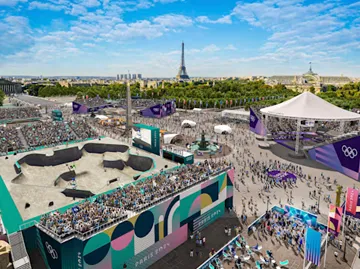
City: 8th district, France
Established: 1830
Capacity: 10,000
Since its bid for the Games began, Paris 2024 has sought to integrate urban sports into the natural urban fabric, moving beyond traditional stadiums and situating them at the heart of the city. This vision materializes through the temporary transformation of La Concorde into an open arena, showcasing Paris City Council's dedication to implementing substantial urban planning reforms aimed at the sustainable rejuvenation of this iconic site.
Nearby Places to visit: Grand Palais, Eiffel Tower, Hôtel des Invalides, Champs-Elysées, Arc de Triomphe, Notre-Dame Cathedral, Jardin des Tuileries
Nearby Olympic venues: Champ de Mars Arena, Esplanade des Invalides, Trocadéro, Eiffel Tower Stadium, Grand Palais
How to Get There Using Public Transport?
Auber' stop: RER, then a 1000 m walk to reach the venue
Musée d'Orsay' stop: RER, then 660 m walk to reach the venue
Palais Royal-Musée du Louvre' stop : Metro 1 / 7, then 1 150 m walk to reach the venue
Stop 'Madeleine' : Metro 8 / 12 / 14, then a 450 m walk to reach the venue
Franklin D.Roosevelt' stop: Metro 9, then 700 m walk to reach the venue
Olympics Venue FAQs
- Which city is going to hold Olympics 2024?The countdown is on to Friday's Olympic opening ceremony and the start of the 2024 Paris Games.
- How many countries participate in the Olympics in 2024?A total of 206 countries are participating in the 2024 Summer Olympics in Paris.
- Where will the opening ceremony for the 2024 Olympics take place?The opening ceremony procession for the 2024 Olympics will start under the Austerlitz Bridge near Jardin des Plantes and conclude at the Trocadéro near the Eiffel Tower. French President Emmanuel Macron will deliver a speech, and the Olympic torch will be lit at this iconic location.
- How can you purchase tickets for the 2024 Olympics?Tickets for the Paris 2024 Olympic Games may become available for purchase again before the event. For the most accurate and reliable ticketing information, visit the official ticketing website. Only this authorized site is permitted to sell tickets; no other platforms are authorized.
- How many venues are there in Paris 2024?The 2024 Summer Olympics will kick off this week across 35 venues primarily located in and around Paris. Competitions will start on Wednesday at the soccer and rugby sites.
- What is the main stadium for the Paris Olympics 2024?The Stade de France will be the primary venue for athletics at the 2024 Paris Olympics.

Log in for Better Reading Experience!
 Continue with Google
 By signing in, you agree to our Terms and Privacy Policy

Gender
Select your Gender
- Male
- Female
- Others
Age
Select your Age Range
- Under 18
- 18 to 25
- 26 to 35
- 36 to 45
- 45 to 55
- 55+

